
Hoarder House Clearance
We understand the complexities of hoarding, as a mental health condition that many suffer from, and we handle these house clearance projects sensitively and sympathetically.
We work with our clients patiently, and at their pace, appreciating that this process can be a huge deal for them, which needs careful management to avoid causing distress.
Often, we find important documentation buried in the mountains of material, like a will or financial paperwork, and keys to a car.
We are hoarding clearance specialists and able to deal with any situation, including severe circumstances
Regularly assisting families of deceased, executors, solicitors, court of protection and those with power of attorney by recommendation.
We have a high success rate for finding important documents and valuables inside hoarded properties for our clients, and to date have regularly and very found many many important documents including The Last Will & Testament, financial ducuments, vehicle documents, lost vehicle keys on behalf of countless clients.
A Sensitive Approach
Experienced, sensitive and discrete de-cluttering and hoarded house clearance specialists, during a cluttered house clearance we carry out the removal and disposal of:
-
-
- Accumulated possessions
-
- Rubbish
-
- Clutter
- All types of waste matter from the home, garden and outbuildings of a hoarded house
-
Whether deceased or still occupying a property, we act in the most sensitive and private manner. We will not be beaten on service.
Experienced Help and Assistance
After many years of providing help for clearing hoarder’s houses, we have become the most experienced company in the UK. Dealing with the clearance of properties, including gardens and outside areas which have become unusually full of hoarders collections and clutter. To the point that significant additional resources are required to clear and clean-out the property. This often arises as a result of compulsive hoarding, which may be a manifestation of obsessive-compulsive disorder, or OCD.
The UK’s Leading Compulsive Hoarding House Clearance Specialists
Whether the property or the owners are in The UK or overseas, and you have the task of clearing out a hoarders house and cleaning we can help. The sufferer may still be alive and living in the property, or sadly they may be deceased. In either case we are able to help. Avery Associates deal with all enquiries with the utmost discretion. We are now one of the countries leading authorities in all matters relating to compulsive hoarding, as well as providing sensitive support for OCD or hoarding sufferers and their families.
Nationwide Services and Support
We have a team of de-cluttering specialists, and have worked all over the country carrying out countless hoarded house clearances. Providing support counties for affected individuals, local authorities, private clients and law firms in all cases of hoarding. We are understanding and ensure total client discretion.
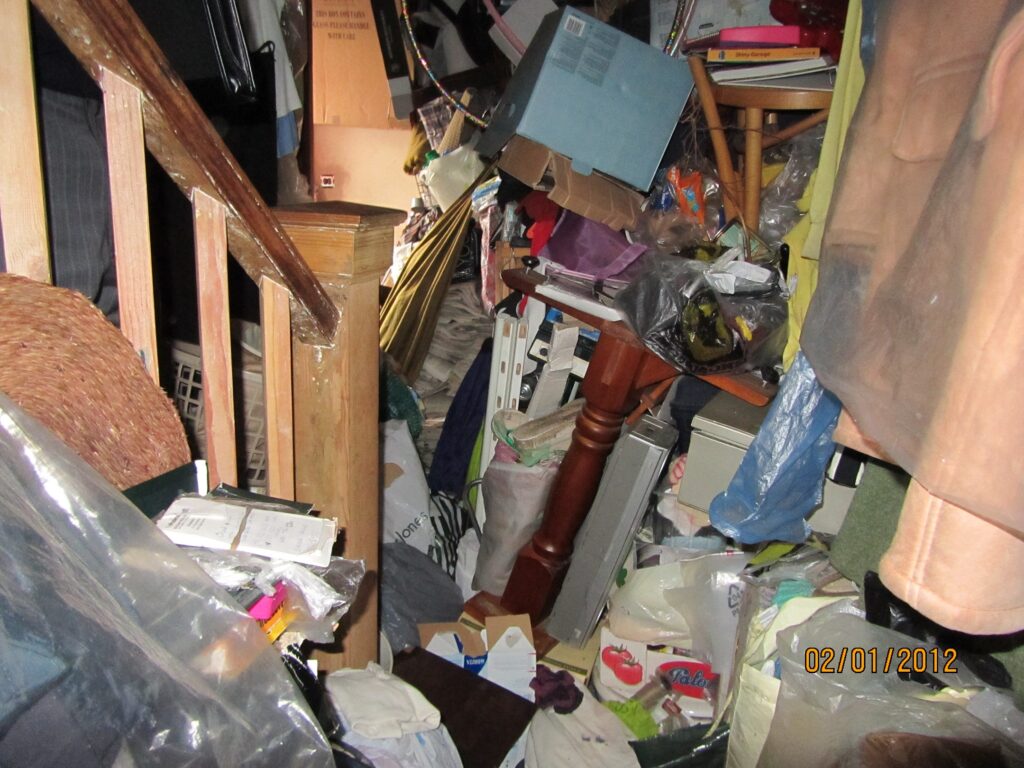
Extreme Hoarding Photo
Working with executors
Finding key paperwork can be crucial when we are working with the estate of a deceased hoarder.
If there are financial issues, with funds not being readily available until probate has been granted, we are happy to take a <25%> deposit upfront, with the balance not being due until the property is sold or probate has been granted.
Common problems that arise when clearing a hoarded house include:
In a hoarder’s home, the huge scale of possessions can cause a fire hazard or trip hazard, and may even cause structural damage to the flooring due to the pressure of the physical weight.
We often have to take extra care to find items of value and documents of importance, that can be literally buried amongst what appears to be rubbish.
The inhabitant could have hoarded pets as well as possessions, which could have caused health hazards that we need to deal with.
On occasion, a person could have sadly passed away in the property and not been found for some time. In this sensitive situation, we bring in a specialist team to deep clean the area so that any bodily fluids and odours are eradicated, leaving the property clean, hygienic and presentable.
As we do with all our house clearance projects, we pass on as much of the furniture and household items we can to be reused, working with charities and non-profit organisations to make sure the belongings go to good use.
Other items are recycled, and anything else left over is disposed of in line with local authority regulations.
Discretion and confidentiality
Whether the hoarding has been compulsive behaviour, or as a result of ill health, we guarantee our utmost discretion.
If it is helpful to safeguard loss against claims of negligence or theft, we can take photos and videos as evidence of the possessions we have found in the property. This can be useful if the hoarder had a form of dementia and their relatives were far away, unable to witness the situation in person.
Identifying hoarder behaviour
A hoarder disorder is when someone obtains an excessive number of items and then stores them in a chaotic matter that gets out of control and negatively affects their living conditions.
Usually, they end up surrounded by an immense amount of clutter that can stop them freely moving around their home, or even using their bedroom, kitchen and bathroom.
The items they collect often have little or no monetary or practical value.
Hoarders can become distressed at the thought of having these belongings taken away, at the same time as being overwhelmed by their situation.
We are empathetic to compulsive hoarders’ predicament, and we always treat them with patience, respect and care.
Hoarding may or may not be related to Obsessive Compulsive Disorder. Several traits are common to hoarders, such as depression, drug addiction, acoholism but it does not seem to involve the same neurological mechanisms. The condition may also be related to ICD, or Impulse Control Disorder.
Hoarding may or may not be related to Obsessive Compulsive Disorder. Several traits are common to hoarders. These include depression, drug addiction, acoholism but it does not seem to involve the same neurological mechanisms. The condition may also be related to ICD, or Impulse Control Disorder.
More information on compulsive hoarding or for professional counselling services, click here.